Brain Health • 50+ • Cognitive Aging
For the 50+: The “10-Year Younger Brain” Effect (Backed by Science)
Why Researchers Keep Pointing to Sudoku as a Cognitive Advantage After 50

After 50, the question is no longer whether the brain changes.. it’s whether those changes are passive or trained. Quietly, across cognitive research, one pattern keeps reappearing: adults who regularly engage in specific mental challenges often perform like people years younger on standardized thinking tests. Not supplements. Not expensive programs. Structured mental strain.
What makes this especially interesting is which activity keeps showing up. Not fast-tapping apps. Not memory flashcards. But a deceptively simple logic exercise that forces focus, restraint, pattern recognition, and decision-making under uncertainty. The research doesn’t call it “brain training.” It calls it cognitive load. Most people know it as Sudoku.
Quick Navigation
The “10-Year Younger Brain” Angle: Why Sudoku Feels Different After 50
Most content about Sudoku falls into the same trap: “It’s good for your brain.” That’s vague. The more interesting point is this: several studies and reports associate frequent puzzle engagement with cognitive scores that look meaningfully younger.
Think of it like this: Sudoku isn’t a “game.” It’s a tiny daily negotiation between your brain and uncertainty. Every grid forces your mind to scan, hold patterns, update possibilities, and commit, over and over. Those are the exact skills that quietly fade when they’re no longer challenged.
What Sudoku is really training
- Working memory: holding candidates in mind and updating them without losing the thread.
- Executive function: resisting impulsive guesses, choosing strategy, switching tactics when stuck.
- Attention control: scanning constraints, spotting contradictions, staying mentally “on task.”
The Brain Area You’re Secretly Exercising: Your “Control Center”
If you’ve ever felt your mind “tighten” while solving a tricky Sudoku, that sensation isn’t imaginary. Sudoku leans heavily on brain systems responsible for planning, logic, and controlled decision-making, often discussed as executive control networks.
That matters after 50 because executive control is the difference between: “I can still learn this new tool at work,” and “I’m overwhelmed by everything.”
The Mood Benefit Nobody Advertises: Sudoku Can Be a Stress Switch
Here’s the paradox: Sudoku is challenging, yet many people feel calmer afterward. That’s because the right level of challenge can pull you into a focused, “flow-like” state, the mental zone where the noise drops and your attention becomes clean.
Why it can feel calming (even when it’s hard)
- Micro-wins: each correct placement reinforces effort and encourages continued focus.
- Predictable rules: unlike life, Sudoku is fair, your actions reliably change the outcome.
- Single-task focus: you can’t doom-scroll and solve Sudoku well; the puzzle pulls you back.
For professionals over 50, this is underrated: Sudoku can function as a practical “reset ritual” between work stress and home life, without special equipment, perfect schedules, or a gym membership. Many adults also report improved calm and focus within weeks of consistent practice (individual experiences vary).
The Hidden Social Benefit: Sudoku as a Connection Engine
Sudoku looks solitary, until you notice what it creates: a shared language. A daily challenge. A “did you see that pattern?” conversation starter.
Social engagement is consistently linked with better health outcomes as we age. Sudoku can be the bridge: it gives people something to do together that isn’t awkward, isn’t political, and doesn’t require physical intensity.
Simple ways Sudoku becomes social (without feeling like “a club”)
- Two-person solve: one scans rows, one scans boxes; compare notes every 2–3 minutes.
- Text-a-grid habit: send the same daily puzzle to a friend and compare solve times.
- Family ritual: “one puzzle before dinner” can bring people to the table, fast.
Sudoku vs. “Brain Training Apps”: The Credibility Advantage
If you’re comparing Sudoku to flashy brain-training apps, here’s the clean professional framing: Sudoku is transparent. You can see exactly what skill you’re using. There are no mysterious scores or gamified “brain age” claims.
Sudoku also has an edge many adults prefer: it’s not noisy. It doesn’t demand logins, subscriptions, streak anxiety, or notifications. It’s just you and a grid, and the quiet satisfaction of getting better.
The 12-Minute Sudoku Protocol for Adults Over 50
If you want real benefit, you don’t need heroic effort. You need consistency and the right difficulty. Here’s a simple routine designed to be doable even on busy days.
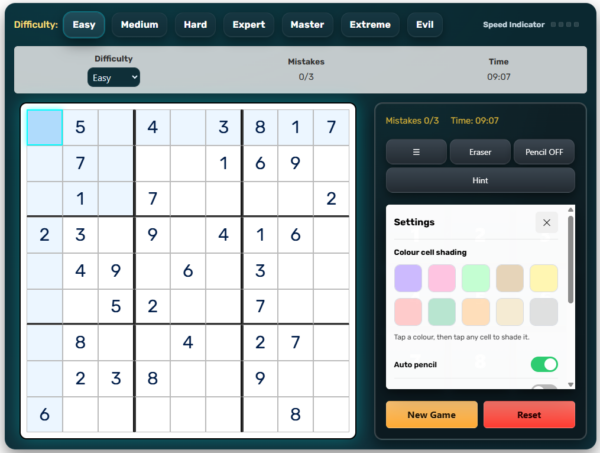
Step 1: 2 minutes — “Warm Scan”
- Scan rows/columns/boxes for obvious placements.
- Do not guess. Your brain is learning restraint.
Step 2: 8 minutes — “Working Memory Load”
- Pick one number (e.g., all 7s). Place everything you can.
- If you get stuck, switch to another number (e.g., all 3s).
Step 3: 2 minutes — “Stop on a Win”
- End right after a small breakthrough.
- This trains your brain to associate effort with reward (and makes you want to come back tomorrow).
Play today’s puzzle on Sudoku4Adults.com and commit to 12 minutes a day for 14 days. Track what changes first: focus, calm, and mental stamina. You may be surprised.
A Responsible (But Powerful) Conclusion
Sudoku isn’t a cure. It won’t replace sleep, movement, nutrition, or social connection. But it can become the habit that makes the rest of your life feel easier, because it trains the mental fundamentals: attention, patience, pattern recognition, and decision-making under uncertainty.
And for adults over 50, that’s not “just a hobby.” It’s practice for independence, one square at a time.
FAQ: Sudoku and Brain Health After 50
Is Sudoku proven to prevent dementia?
No. Sudoku is not proven to prevent dementia, and it should not be presented as a treatment. Some research links regular puzzle engagement with stronger cognitive test performance in older adults, but much of this evidence is observational. Sudoku can be a useful, low-cost cognitive stimulus alongside proven brain-health habits (exercise, sleep, cardiovascular care, and social connection).
How often should I do Sudoku for brain benefits?
Consistency tends to matter more than duration. A realistic target is 10–15 minutes most days, using puzzles that feel challenging but not frustrating. If you dread it, it’s too hard; if you breeze through, increase difficulty gradually.
What difficulty is best for adults over 50?
Start easy-to-medium to build momentum and reduce stress. Then add harder puzzles 1–2 times per week to increase cognitive load. The ideal difficulty keeps you focused and thinking, but doesn’t force guessing.
References
-
Alzheimer’s Society — Brain training and cognitive stimulation (overview of cognitive stimulation and brain health).
View source -
“People who play word and number puzzles have better cognitive function in later life” — study report coverage.
View source -
Working memory and Sudoku performance — research discussing the relationship between Sudoku solving and working memory.
View source -
Neuroimaging / prefrontal cortex activation in Sudoku solving (overview coverage).
View source
Note: References are provided for transparency and credibility. Findings vary by study design; observational associations do not prove causation.
Medical note: This article is for education only and is not medical advice. If you have concerns about memory, mood, or cognitive changes, speak to a qualified health professional.