Sudoku vs Chess: Which Game Gives Your Brain the Best Workout?

Sudoku vs Chess: Which Game Gives Your Brain the Best Workout?

Sudoku vs Chess

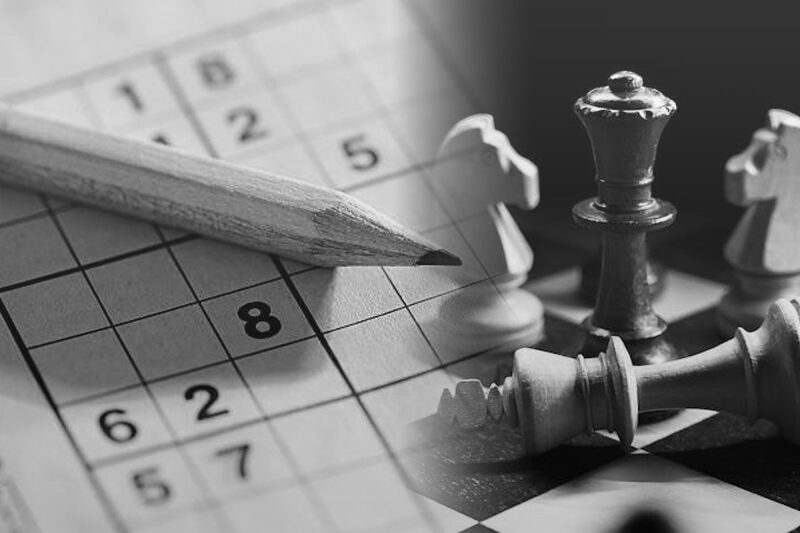
Ever wondered whether filling a grid with numbers or moving knights and queens around a board does more for your brain? In the age of brain‑training apps and cognitive‑health trackers, Sudoku. and chess have become icons of mental fitness. They’re portable, inexpensive and fun—but do they actually enhance your brain power?

Research tells us that mental exercise matters. Scientists from Brown University Health note that cognitive activities and physical exercise together improve blood flow to the brain and trigger chemical changes that enhance memory, mood and thinking. Mental exercises can keep older adults mentally sharper for up to 10 years. Still, experts warn that no single game will magically boost overall intelligence: building cognitive reserve requires variety and a willingness to challenge oneself.

This article dives deep into the science behind Sudoku and chess, comparing their cognitive benefits, highlighting research‑backed strategies and exploring which game might suit your brain—whether you’re looking for a quick logic puzzle, a social strategy battle or a balanced mental workout.


The Science of Sudoku: More Than Numbers in a Grid

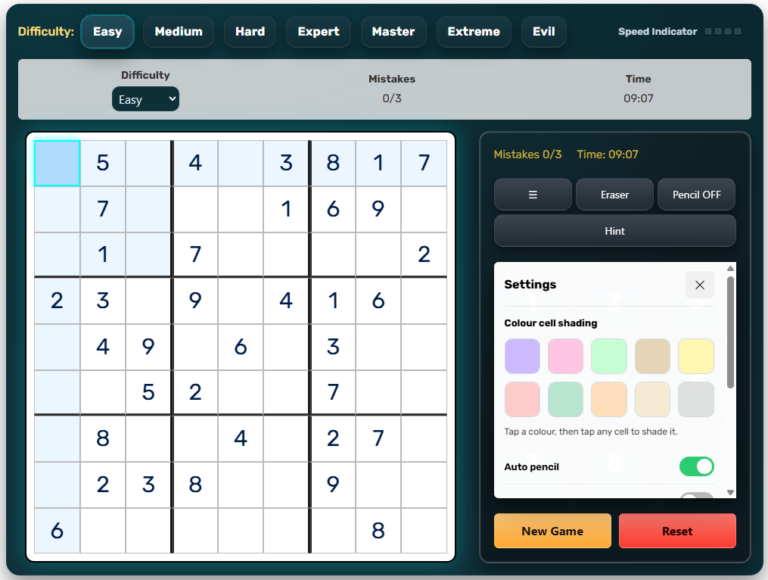
Sudoku looks simple: fill a 9×9 grid so that each row, column and 3×3 block contains the digits 1–9. Yet the process forces your brain to juggle patterns, memory and logic in real time.

What the research says

  • Activating your prefrontal cortex (PFC). A 2020 functional near‑infrared spectroscopy (fNIRS) study monitored participants’ brains while solving Sudoku. It found that both medial and lateral regions of the PFC—home to executive functions like planning and decision‑making—became active during the puzzle. Oxygenated blood flow increased as the puzzles became more complex, showing that Sudoku recruits higher‑order thinking.
  • Boosting memory and neuroplasticity. Recent analyses highlight that regular Sudoku practice improves working memory. A 2024 UCLA study reported an 18 % improvement in working memory after daily Sudoku over six months, and researchers now link Sudoku to increased gray‑matter density in brain regions tied to memory. Other 2025 research notes that Sudoku may enhance neuroplasticity and reduce dementia risk by up to 27 %, though broader clinical validation is needed.
  • Reducing stress. The rhythmic concentration required to solve puzzles can act like meditation. A 2023 Harvard study observed a 32 % drop in stress markers among participants who solved puzzles daily.
  • Cognitive limits. Despite these benefits, neuropsychologists caution that improvements from “brain games” are largely task‑specific. You will get better at Sudoku, but those skills don’t always translate to general memory or IQ.

How Sudoku trains different skills

SkillHow Sudoku helps
Logical reasoning & pattern recognitionDeductive logic and pattern spotting light up the PFC and parietal lobes.
Working memoryTracking multiple possibilities and temporary placements strengthens short‑term memory.
Attention & concentrationSustained focus is needed to avoid repeating numbers and to analyze possibilities.
Stress relief & mindfulnessThe calm, rhythmic nature of puzzle solving reduces cortisol and encourages a meditative state.

Tips to maximize Sudoku’s brain benefits

  • Start simple and level up. Begin with easy puzzles to learn patterns, then gradually move to harder ones. This progression challenges the brain continuously and builds confidence.
  • Use advanced techniques. Methods like cross‑hatching, pencil marks and scanning rows/columns narrow down possibilities and exercise logic.
  • Mix up puzzle types. Try diagonal, killer or samurai Sudoku to avoid routine and keep your brain guessing.
  • Pair puzzles with physical activity. Studies show that exercise enhances blood flow and neurogenesis, amplifying the benefits of mental tasks.

The Science of Chess: Strategy, Memory and Brain Connectivity

Chess is more than a board game, it’s an intellectual sport played by millions, requiring foresight, pattern recognition and mental endurance.

What the research says

  • Prefrontal cortex dynamics. An fNIRS study that monitored competitive chess players solving problems of increasing difficulty found that activation in the left prefrontal cortex increased with task complexity for both adolescents and adults. Chess engages a wide array of cognitive resources, including memory, attention, perceptual grouping and spatial reasoning.
  • Protecting against cognitive decline. A scoping review exploring chess as a protective factor for dementia reported that older adults who regularly played board games (including chess) and engaged in 10 or more cognitive activities were about 35 % less likely to develop dementia and delayed Alzheimer’s onset by roughly 1.5 years. While more clinical evidence is needed, the review concludes that chess may help build cognitive reserve.
  • Building neural networks. Neuroimaging studies suggest that expert chess players develop greater connectivity between brain regions involved in decision‑making, attention and visuospatial processing. Experienced players show activation patterns related to object perception and pattern recognition that novices lack.
  • Task‑specific gains and emotional benefits. Like Sudoku, chess improvements are domain‑specific. Some studies summarized by the Banner Alzheimer’s Institute note that brain games may not translate to general cognition. However, chess offers unique social interaction and may improve emotional regulation; playing games with others reduces isolation and is linked to lower cognitive decline.

How chess trains different skills

SkillHow chess helps
Strategic planning & foresightPlayers must plan multiple moves ahead, evaluate risk vs. reward and anticipate opponents’ responses.
Working & long‑term memoryMemorizing openings, tactics and endgames strengthens both working and episodic memory.
Spatial reasoningVisualizing piece positions and potential interactions engages the parietal lobe.
Problem‑solving & flexibilityChess problems require adapting strategies to new situations; PFC activation increases with difficulty.
Social interaction & emotional regulationPlaying chess with friends or online opponents fosters social engagement and may improve mood and resilience—important factors for cognitive health.

Tips to maximize chess’s brain benefits

  • Learn the basics and beyond. Study opening principles (control the center, develop pieces, king safety) and endgame techniques (king and pawn endings, opposition). Structured learning provides a framework for strategic growth.
  • Analyze your games. Reviewing wins and losses improves pattern recognition and integrates new tactics into long‑term memory.
  • Play at various time controls. Blitz, rapid and classical formats challenge different cognitive abilities, quick decision‑making versus deep strategic planning.
  • Join a community. Playing in clubs or online platforms offers social interaction, motivation and a variety of opponents, critical for building cognitive reserve.

Head‑to‑Head Comparison: Sudoku vs Chess

Cognitive focus

  • Logic vs. Strategy: Sudoku’s core is deductive logic and pattern recognition. The game is deterministic, there’s a single correct solution and appeals to those who enjoy methodical problem solving. Chess, in contrast, requires long‑term strategic planning, adaptability and opponent modeling. Every move alters the game state and forces players to evaluate countless possibilities.
  • Memory demands: Sudoku primarily taxes working memory as players keep track of possible numbers. Chess engages both working and long‑term memory; players recall openings, tactical motifs and endgame patterns.
  • Spatial vs. numerical reasoning: Chess is inherently spatial; you must visualize piece movement across a grid. Sudoku’s challenge is numerical and abstract, focusing on pattern elimination.
  • Social vs. solitary play: Chess invites social interaction through clubs, tournaments and online matches. Sudoku is often solitary but can be shared through online leaderboards or puzzle races.
  • Time commitment: A Sudoku puzzle typically takes 10–30 minutes, while chess games can last from 5‑minute blitz to hour‑long classical matches.

Benefits by age

Age groupSudoku benefitsChess benefits
Children & teensEnhances focus and patience; develops number sense and encourages persistence.Improves problem‑solving, creativity and academic performance; chess instruction has been linked to better math and reading skills.
Working adultsProvides stress relief during work breaks and improves multitasking and memory.Builds strategic thinking and decision‑making skills useful in business and leadership roles.
Older adults & seniorsSolving number puzzles may help maintain cognitive function and delay decline.Board games, including chess, are linked to a 35 % lower risk of developing dementia and delay Alzheimer’s onset by 1.5 years.

Which game should you play?

  • Choose Sudoku if you enjoy quick, self‑contained logic challenges. Sudoku is perfect for coffee breaks, commutes or winding down at night. It improves deductive reasoning and focus and can be played alone anywhere.
  • Choose chess if you crave dynamic strategic battles and social interaction. Chess develops foresight, adaptability and memory, and its social aspects, tournaments, clubs and online play enhance engagement.
  • Combine both for balance. Alternating between Sudoku and chess gives your brain a well‑rounded workout, engaging logic, strategy, memory, spatial reasoning and social skills. Variety also prevents burnout and builds cognitive reserve.

Beyond Puzzles: Building a Brain‑Healthy Lifestyle

Puzzles and games are valuable tools, but cognitive health relies on a broader lifestyle. Neurologists stress that getting enough sleep, exercising regularly and following a heart‑healthy diet are essential. Social engagement is equally important; a 2019 study found that people with more frequent social contact were less likely to experience cognitive decline.

Consider these additional brain‑boosting strategies:

  1. Cross‑train mentally. Learn a new language, instrument or craft. A 2014 study showed that older adults who learned demanding skills like quilting or photography improved memory function.
  2. Stay physically active. Moderate aerobic and resistance exercise improves blood flow and cognitive function.
  3. Engage in social hobbies. Join a club, attend game nights or volunteer. Socializing exercises multiple cognitive domains and supports emotional well‑being.
  4. Balance digital and analog. While online brain games are convenient, mixing in physical puzzles and face‑to‑face games adds sensory variety and human connection.

Frequently Asked Questions

Does Sudoku improve IQ? Sudoku strengthens logic, attention and working memory. However, cognitive scientists note that the benefits are largely task‑specific; regular Sudoku practice makes you better at Sudoku, not necessarily at unrelated cognitive tasks.

Can chess prevent Alzheimer’s disease? Observational studies show that older adults who play board games like chess are less likely to develop dementia. Chess contributes to cognitive reserve, which may delay cognitive decline, but it is not a guaranteed preventive measure. Healthy lifestyle factors remain essential.

How often should I play to see benefits? Consistency matters more than marathon sessions. Short, regular sessions (3–5 times per week) that gradually increase in complexity keep your brain challenged. Balance mental exercise with physical activity and rest.

What other games or activities should I try? To cross‑train your brain, experiment with crosswords, jigsaw puzzles, strategic card games, language learning apps, music lessons or drawing. Variety engages different neural circuits.


Conclusion: Choose Your Challenge

Sudoku and chess are two of the world’s favorite mental workouts. Each game offers distinct cognitive benefits: Sudoku delivers compact logic training and stress relief, while chess fosters strategic thinking, memory and social engagement. Evidence suggests that both can contribute to cognitive reserve and may delay age‑related decline.

Ultimately, the “best” brain game depends on your goals and preferences. Do you want a solitary, quick puzzle or an interactive battle of wits? For most people, the optimal strategy is to blend both games with other mentally and physically stimulating activities. By diversifying your cognitive exercises and maintaining a healthy lifestyle, you’ll give your brain the best chance to stay sharp, resilient and ready for any challenge.

Daily Challenges

Daily Sudoku Challenges

Push yourself every day with fresh challenges. Test your skills, climb the leaderboard, and come back tomorrow for a brand new shot at glory.

Play Now

Monthly Best Times

This Month’s Best Times

Speed meets precision meets leaderboards. The month’s fastest times are immortalized on the leaderboard. Think you have what it takes?

View Fastest Players

Awards

Sudoku Puzzle Awards

Earn recognition for how you play. From mastering different Sudoku levels to hitting milestones, collect awards that showcase your skills.

View Your Collection

Weekly Tournaments

Weekly Tournaments

Who has been putting in the work this week The weekly tournaments rank the top players who completed the most Daily Challenges.

View Leaderboard

Printable Puzzles

Free Printable Sudoku

Grab your favorites and play anytime without screens. Perfect for travel, classrooms, or quiet time. Instant PDF printing.

Download & Print

Sudoku Solver

Sudoku Solver

Stuck on a puzzle? Instantly solve any Sudoku with ease. Enter the numbers and let the solver do the rest. Great for learning tricky steps.

Try the Solver

Sudoku Rules

Rules

New to Sudoku or need a refresher Learn the simple rules that make Sudoku so addictive. Perfect for beginners and seasoned players.

Learn How to Play

The Best Sudoku Books Out Now